Navigating EU import duties and tariffs on toilet seats from China in 2026 requires understanding specific Harmonized System (HS) codes and potential trade agreements. While general rates exist, individual product classifications and origin country details are crucial for accurate calculations.
Your Comprehensive Guide to EU Import Duties and Tariffs on Toilet Seats from China (2026)
For businesses operating within the European Union and sourcing toilet seats from China, understanding the intricacies of import duties and tariffs is paramount. As the landscape of international trade evolves, staying informed about current and projected regulations for 2026 is crucial for maintaining profitability, ensuring compliance, and optimizing supply chain logistics. This guide, brought to you by Jell Group, a leading Chinese MDF toilet seat manufacturer established in 2009 in Jingmen, Hubei, aims to demystify the complexities of EU import duties and tariffs.
Understanding the Basics: HS Codes and Tariffs
The foundation of any import duty calculation lies in the Harmonized System (HS) code. This internationally standardized system classifies traded products. For toilet seats, the relevant HS code typically falls under Chapter 94, which covers "Furniture; bedding, mattresses, mattress supports, cushions and similar stuffed furnishings; lamps and lighting fittings, not elsewhere specified or included; illuminated signs, illuminated name-plates and the like; prefabricated buildings." More specifically, toilet seats are often classified under:
- HS Code 9403.90: This code generally pertains to "Other furniture and parts thereof." Within this, specific subheadings will dictate the exact tariff rate based on material and type. For instance, toilet seats made from wood or wood-based materials like MDF will have their own precise classification.
The EU employs a Common Customs Tariff (CCT) system, meaning that once goods are imported into any EU member state, they can generally circulate freely within the entire bloc. The tariff rate applied is determined by the HS code of the product and its country of origin. China, as a major manufacturing hub, has specific tariff rates applied to its exported goods.
Projected EU Import Duty Rates for Toilet Seats from China in 2026
Predicting exact tariff rates for future years can be challenging due to potential policy shifts, trade negotiations, and evolving economic conditions. However, based on current trends and existing agreements, we can provide an informed outlook for 2026.
As of our last update, the standard EU import duty rate for many furniture components, including toilet seats originating from China, typically falls within the range of 3% to 10% of the declared customs value of the goods. This value usually includes the cost of the goods, insurance, and freight (CIF) to the EU border.
Key Factors Influencing the Rate:
- Product Classification (HS Code): As mentioned, the precise HS code is critical. A toilet seat made entirely of MDF will likely have a different classification and tariff than one with metal components or integrated electronic features.
- Country of Origin: The tariff rate is specifically applied to goods originating from China. If your supplier sources components from other countries, the origin rules of the EU will need to be carefully considered.
- Trade Agreements: The EU has various trade agreements with different countries. While China does not currently have a comprehensive free trade agreement with the EU, it's always prudent to monitor any developing trade dialogues.
- Anti-Dumping Duties: In certain cases, if the EU determines that goods are being sold at unfairly low prices (dumping), it may impose additional anti-dumping duties. While not currently a widespread issue for standard MDF toilet seats from China, this is a factor to be aware of in the broader trade landscape.
Beyond Tariffs: Other Import Costs to Consider
It's essential to remember that import duties are just one part of the total cost of importing toilet seats into the EU. Several other charges and considerations can impact your bottom line:
- Value Added Tax (VAT): Upon import, VAT will be levied at the rate applicable in the EU member state of importation. This is typically between 17% and 27%, depending on the country. While VAT is ultimately a tax on consumption, it is collected at the point of import and can represent a significant upfront cost. Businesses registered for VAT in the EU can usually reclaim this VAT as input tax.
- Customs Processing Fees: Each EU member state's customs authority may charge fees for processing import declarations and inspections. These are usually relatively small but add to the overall cost.
- Insurance: Marine or air freight insurance is crucial to protect your goods during transit. This cost is typically factored into the CIF value upon which duties are calculated.
- Transportation Costs: The cost of shipping from China to the EU port, and then to your final destination within the EU, will be a significant component of your landed cost.
Simplifying EU Imports: The Jell Group Advantage
Navigating these regulations can be complex and time-consuming. At Jell Group, we understand the challenges faced by our B2B clients in the EU market. With over a decade of experience in manufacturing high-quality MDF toilet seats, we are committed to facilitating smooth and efficient international trade. Our dedication to quality is underpinned by adherence to international standards, evidenced by certifications such as:
- FSC (Forest Stewardship Council): Ensuring our wood-based materials are sourced responsibly.
- TUV: Independent certification of product quality and safety.
- BSCI (Business Social Compliance Initiative): Demonstrating our commitment to ethical labor practices and social responsibility in our supply chain.
- CARB (California Air Resources Board): Ensuring compliance with strict formaldehyde emission standards, crucial for indoor air quality.
- CE Marking: Indicating conformity with health, safety, and environmental protection standards for products sold within the European Economic Area.
Furthermore, to streamline delivery and reduce lead times for our European clients, Jell Group maintains strategically located European warehouses in Germany and Poland. This allows us to offer faster dispatch and more reliable delivery schedules, minimizing the impact of international shipping complexities and potential customs delays.
Table: Estimated Landed Cost Calculation Example (Hypothetical)
To illustrate, let's consider a hypothetical shipment of 1,000 MDF toilet seats from Jell Group to an EU port. This is a simplified example and actual costs may vary.
| Cost Component | Estimated Value (€) | Notes |
|---|---|---|
| Product Cost (FOB China) | 10,000 | Excludes shipping and insurance from China |
| Shipping & Insurance (to EU Port) | 1,500 | CIF Value Calculation |
| CIF Value | 11,500 | Basis for duty and VAT calculation |
| Import Duty (e.g., 5% of CIF) | 575 | Assumes a 5% duty rate for the specific HS code |
| VAT (e.g., 20% of CIF + Duty) | 2,315 | Assumes a 20% VAT rate in the destination country |
| Customs Processing Fees | 50 | Estimated fee |
| Inland Transportation (within EU) | 700 | From port to your warehouse |
| Total Landed Cost (Approximate) | 15,140 | Excludes any potential warehousing or distribution costs within the EU |
Disclaimer: This table is a hypothetical illustration. Actual costs will vary based on specific product classification, negotiated rates, shipping routes, and prevailing VAT and customs regulations.
Staying Ahead: Preparing for 2026 and Beyond
The global trade environment is dynamic. For businesses relying on imports from China, proactive planning is essential. Here are some key strategies:
- Maintain Clear Product Specifications: Ensure your product descriptions and specifications are precise. This is crucial for correct HS code classification.
- Work with Experienced Suppliers: Partner with manufacturers like Jell Group that have a proven track record in international trade and understand compliance requirements.
- Consult Customs Brokers: Engage with reputable customs brokers in your target EU countries. They can provide the most up-to-date information on duties, taxes, and import procedures.
- Monitor Trade Policy Changes: Stay informed about any new trade agreements, tariff adjustments, or regulatory changes announced by the EU.
- Diversify if Necessary: While China remains a powerhouse for manufacturing, consider the long-term benefits of supply chain diversification if geopolitical or trade tensions escalate.
Conclusion: Partnering for Success
Importing toilet seats from China into the EU in 2026 will continue to involve navigating a complex web of duties, tariffs, and regulations. However, with thorough preparation, a clear understanding of the requirements, and the right manufacturing partner, these challenges can be effectively managed. Jell Group is dedicated to providing high-quality MDF toilet seats that meet rigorous international standards, backed by a commitment to transparent and efficient global trade. Our established presence with European warehouses and a focus on certifications like FSC, TUV, BSCI, CARB, and CE demonstrates our readiness to support your business needs.
For inquiries about our product range, pricing, and how we can help you navigate the complexities of EU imports, please do not hesitate to contact our sales team.
Reach out to us today at [email protected] to discuss your requirements and explore how Jell Group can be your trusted partner for high-quality toilet seats.
blog.relatedArticles
Bathroom Renovation 2026: Toilet Seat Upgrade Ideas for Modern Spaces
Planning a bathroom renovation in 2026? Discover innovative toilet seat upgrade ideas that blend aesthetics, hygiene, and smart technology. Elevate your bathroom's functionality and style with Jell Group's premium solutions.
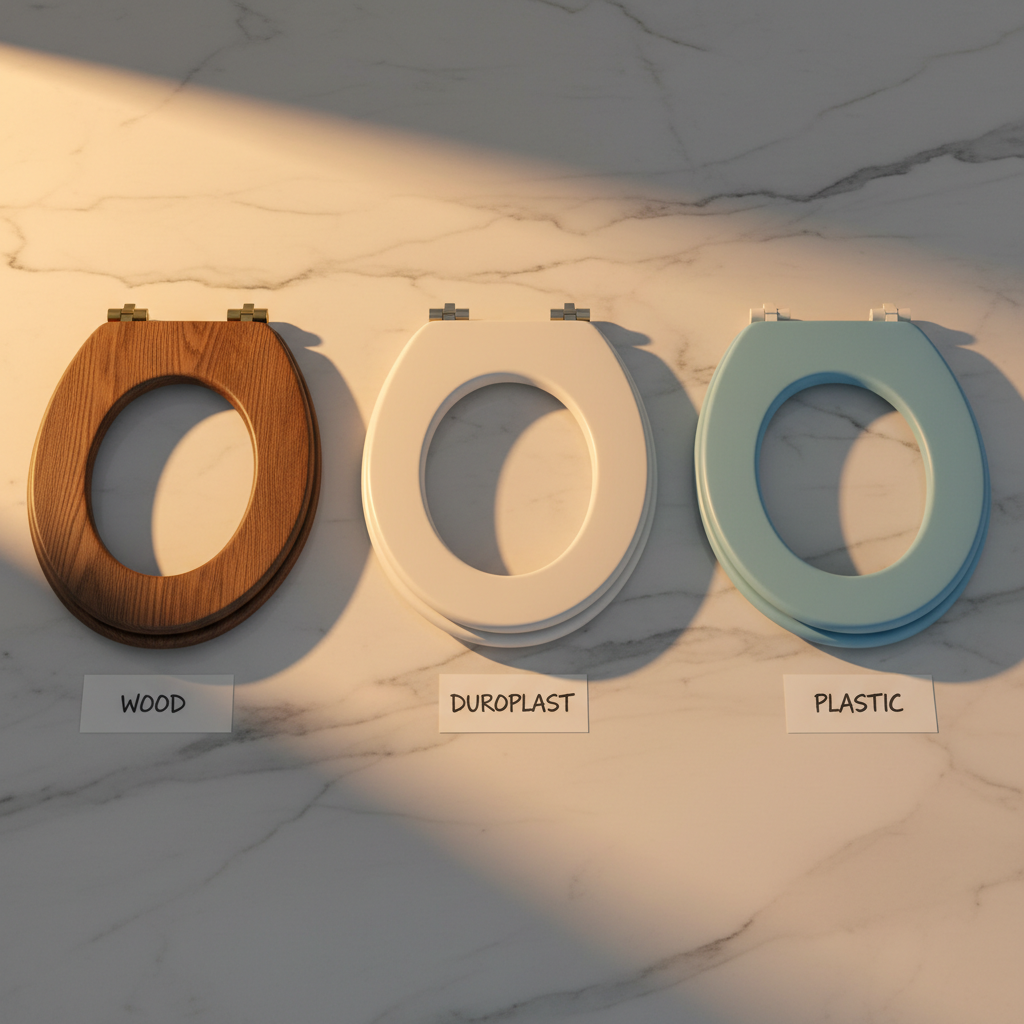
Raised Toilet Seats for Knee Replacement Recovery: Height & Comfort Guide
Discover how raised toilet seats are essential for a smoother knee replacement recovery. This guide covers ideal heights, comfort features, and material considerations for optimal post-operative care, ensuring safety and independence.
Cracked Toilet Seat: Repair or Replace? The Definitive B2B Guide
Navigating a cracked toilet seat? This comprehensive guide for B2B buyers, distributors, and retailers explores whether to repair or replace, offering insights into material types, cost-effectiveness, and quality considerations for optimal decision-making.
Bathroom Renovation Products Kuwait: Choosing the Right Toilet Seats
Navigating bathroom renovation products in Kuwait requires careful consideration, especially when selecting toilet seats. This guide helps B2B buyers understand materials, features, and quality standards for optimal choices.
Industry Case Studies
Thomas M. — Home & Living GmbH
Finding a reliable toilet seat supplier who could provide consistent quality, FSC certification for the German market, and fast restocking through local warehousing. Previous suppliers had inconsistent quality and long lead times from China.
David T. — HomeStyle Bathrooms Ltd
Supplying B&Q required meeting Kingfisher Group's stringent responsible sourcing standards, UKCA compliance, and consistent batch quality across large orders. The supplier needed BSCI certification and FSC-certified materials.
Pierre D. — Maison & Confort SARL
The French market demands elegant design and premium presentation. Finding a manufacturer who could produce artistic printed MDF toilet seats with French-language packaging and competitive pricing for marketplace selling.